ANTICHRIST
The Antichrist, as the word implies, is one who opposes Christ or who falsely presents himself or herself as Christ. Although the word is most commonly associated with the apocalyptic New Testament book of Revelation, the word "Antichrist" is nowhere to be found within its text. In 1 John 2:18, the epistle writer declares that the "enemy of Christ" has manifested and that many false teachers have infiltrated the Christian ranks. In verse 22, John names as the Antichrist anyone who would deny Jesus as the Christ and the Father and the Son, and in 2 John verse 7 he declares that there are many deceivers already at work among the faithful.
The concept of an earthly opponent or antagonist of the Messiah also appears in the Old Testament. The earliest form of the Antichrist is probably the warrior King Gog, who appears in the Book of Ezekiel and who reappears in Revelation along with his kingdom of Magog, representing those earthly minions of Satan who will attack the people of God in a final great battle of good versus evil. In Jewish eschatology, writings about the "end of days" state that the armies of Gog and Magog will eventually be defeated and the world will finally be at peace.
Throughout the Bible the Antichrist bears many titles: Son of Perdition, Man of Sin, Man of Lawlessness, the Prince of Destruction/Abomination, and the Beast. The prophet Daniel describes the man in great detail: He shall be an evil king who will "…exalt himself and magnify himself above every god and shall speak outrageous things against the God of gods, and shall prosper until the indignation is accomplished: for that which has been determined shall come to pass. Neither shall he regard the God of his fathers, nor the desire of women, nor regard any god: for he shall magnify himself above all. But in his estate he shall (secretly) honor a god of forces and a god whom his fathers never knew. To these he will worship with gold and silver and with precious stones and pleasant things. Thus shall he do in his fortress with a strange god, whom he shall acknowledge and increase with glory; and he shall cause them to rule over many and shall divide the land for gain" (Daniel 11:36).
St. Paul, writing in 2 Thessalonians 2:3, had a similar vision concerning the arrogant and evil king: "The man of sin…who opposes and exalts himself above all that is called God or that is worshipped; so that he as God sits in the temple of God, displaying himself as if being God…for the mystery of lawlessness is already at work in the world: only he who now restrains (the coming of the Antichrist) will do so.… And then shall that Wicked [one] be revealed, whom the Lord will consume with the spirit of his mouth.… Destroying him whose coming is in harmony with the working of Satan with all power and signs and false miracles.…"
In both the prophecies of Daniel and John the Revelator, the evil king, the Antichrist, is associated with 10 rulers who give their power and allegiance to him in order to form a short-lived empire of bloodshed and destruction. "And the ten horns of this kingdom are ten kings that shall arise: and another shall rise after them, and he shall be diverse…and speak great words against the most high God and shall wear down the saints of the Highest One and think to make changes in times and laws: and they shall be given into his hand for three and one half years" (Daniel 7:24). "And there are seven kings: five are fallen, and one is, and the other is not yet come; and when he comes, he must continue only for a short time" (Revelation 17:10).
In Matthew 24:3–44, Jesus (c. 6 B.C.E.–c. 30 C.E.) speaks to his disciples at great length concerning the false Messiahs and prophets who will deceive many people with their rumors about the end of the world. He makes reference to the prophet Daniel and his warnings concerning the end times and the Antichrist, and he admonishes the disciples not to chase after false teachers who will produce great miracles and signs to trick God's chosen ones. No one knows when the Son of Man shall appear again coming on the clouds of heaven, Jesus tells them, not even the angels.
Although Jesus makes it clear that no one knows the hour or day of his Second Coming, for many centuries now certain Christian clergy and scholars have steadfastly associated the rise of the Antichrist to earthly power as a kind of catalyst that would set in motion Armageddon, the last final battle between good and evil, the ultimate clash between the armies of Jesus Christ and Satan. Throughout the centuries, Christians have attempted to determine the Antichrist from among the powerful and ruthless leaders of their day. Ever since the Protestant Reformation, the pope has been a favorite of Evangelicals for the ignominious title. While many of the pontiffs in the Middle Ages did exercise great power over the rulers and the people of the emerging European nations, contemporary popes wield little political influence, surely none that would place them in world-threatening positions.
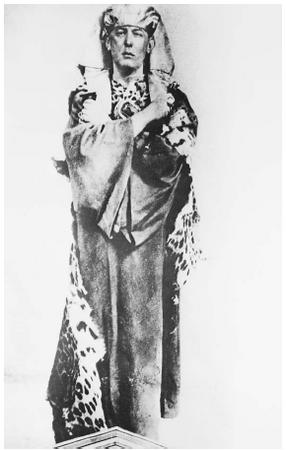
There have been such men as Aleister Crowley (1875–1947), who actually appeared to seek the position by calling himself the Beast and 666. The numerical value of Franklin Delano Roosevelt's (1882–1945) name reportedly added up to 666, and since he held the office of president of the United States for 12 years—and during the Great Depression and World War II—many of his conservative Christian critics began thinking of him as the Antichrist. And even the former President Ronald Wilson Reagan (1911– ), had certain dissenters calling attention to the fact that he had six letters in each of his three names—6-6-6.
In recent decades, the term of Antichrist has been applied to so many individuals in popular culture that it has lost much of its meaning and its sense of menace. During the Gulf War in 1992, Saddam Hussein (1937– ) received many votes for the title of the Beast, especially when he announced plans to begin to restore the ruins of Babylon to a splendor that would approximate the wicked city's former glory. Before Hussein, there were many nominations for the Ayatollah Khomeini (1900–1989) to don the mantle. But later when certain extremists named President Reagan, former U.S. Secretary of State Henry Kissinger (1923– ), and even the children's television icon Barney the Dinosaur as the Antichrist, the word began losing its threat for the general population. However, those Christians who believe strongly in the coming time of Tribulation, the Apocalypse, the Rapture, and the great final battle of good versus evil at Armageddon, firmly believe that the title of Antichrist maintains its fear factor and that those signs and warnings of the Beast as prophesied in the book of Revelation should be seriously heeded.
DELVING DEEPER
Crim, Keith, gen. ed. The Perennial Dictionary of World Religions. San Francisco: HarperSanFran cisco, 1989.
Lindsey, Hal, with C. C. Carlson. The Late Great Planet Earth. New York: Bantam Books, 1978.
McGinn, Bernard. Antichrist: Two Thousand Years of the Human Fascination with Evil. San Francisco: HarperSanFrancisco, 1994.
Unterman, Alan. Dictionary of Jewish Lore and Legend. New York: Thames and Hudson, 1991.
User Contributions:
Comment about this article, ask questions, or add new information about this topic:
Antichrist forum
Copyright © 2008 - Advameg Inc.

This is what I know of him. I hope it helps. As I stated, I have had visions of a strange man for quite some time. I didn't suspect it was the person you speak of until I saw a vision of the word ' Man of sin ' flash through my mind. Until then I did not know who this young dark man was or why I was having nightmares about him. So again, I hope this helps and hope you will read it as well as take me seriously.
1. He lives in a place where it snows.
2. He is blonde haired and blue-eyed.
3. He has a habit of wearing all black clothes.
4. His face is very rough, weathered and fierce.
5. He is very thin and scrawny.
6. He is very skilled on stringed instruments.
7. He reads The Holy Bible every single day.
8. He is well-versed in all manner of esoteric divinations.
9. He is the poorest and lowest among men.
10. He recieves income from the government.
11. He came from an extremely troubled household.
12. He uses marijuana during divination as well as prayer.
13. He has no close friends.
14. He likes to drink alcohol.
15. Has several personalities. Each very extreme seeming.
16. Wears glasses.
17. Is very well spoken. Good manners. Polite for the most part.
18. Is, for the most part, a loner.
19. He suspects his identity.
20. He has a gold crucifix on his wall.
21. Is not a Freemason but for some reason has a Masonic Bible.
22. Comes from a mix of superstition and Presbyterian Faith.
23. His Father is a very mean faced silver-haired man.Poor.
24. He has an older brother as well as sister who are addicts.
25. His only friend is a very old chinese man who repairs T.V.'s
26. He has toured with some type of obscure rock group.
27. He has been in psychiatric institutions several times.
28. He is often very melancholie, enjoying sad music.
29. Seems to make other people quite uncomfortable.
30. He has no obligations in his daily life.
31. He has written bizzarre articles on an internet site.
32. His mother was an alcoholic who died very young.
33. His mother was an exceptional artist with paint.
34. He seems to have very commanding body language.
35. Doe snot seem to ever smile.
36. He has many bizzarre dreams which seem to frighten him.
37. His hair is usually cut quite short. Was long once.
38. He does not drive a vehicle.
39. He did not graduate High-school. Studys on his own.
40. He walks more than the usual person.
41. He is possibly in his twenties.
42. His articles have attracted some shady high-up indiviuals.
43. These individuals are keeping a close eye on him.
44. Has an uncanny ability to draw demonic faces.
45. Is not materialistic at all. Rather almost monastic in a way
47. Seems to live off of the charity of others.
48. He has an uncanny way of speaking in a biblical fashion.
49. Seems to like to speak in parables. Inspires others.
50. He seems to drink more fluids than eats solid food.
51. Has slight vegetarian leanings. Does not cook for himself.
52. He seems to get strange glances wherever he walks.
53. Has a suitcase full of books with occult knowledge.
54. He often reads Tarot cards for small change.
55. Often plays guitar for small change.
56. Seems to really enjoy chapels. Likes Chruch.
57. Likes to daydream more than do.
58. Seems to have no sexual desire at all.
59. Tosses alot in his sleep. Sometimes curses.
60. Doesn't seem to be able to grow facial hair.
61. Has been homeless. Has done alot of hitchhiking.
62. Speaks english. No other language.
63. Lives in a small room in an older womans house.
64. Seems to be a chain-smoker.
65. Seems to be able to read the emotions of others.
66. Has tried to join the military but was rejected. His eyes.
This is all I know. I hope it can help.
Some simplified explanations:
Is the 'little horn' a historical figure? At first sight this seems to be so, as it mentions in v.12 the other 'beasts' being given more time to continue after the fourth beast AND YET this fourth beast and ten horns/little horn seems to be present at the last judgement if you look at v.11.(Obtain a Bible or read it up on the 'net.Space does not allow me here.)
Again v.22 is a parallel event with v.9-11. We are still on ch.7 of the Book of Daniel. This means that the 'little horn', whether that is papal power or something else, will be around at the end of the world, as well as pre-existently the 'beast that once was' in history past. Because there is no reincarnation in the Bible, this must mean that someone from a certain bloodline (perhaps from Antiochus' or the Flavian) might carry on the uncompleted mission of the beast who once was. See the seeming breaks in the continuity of passages like Daniel ch.9 and ch.11. There seems to me to be a lot of double-edgedness in ancient Hebrew literature which may have been their style of telling stories in allegorical form, as opposed to the Greeks' way.
There are also parallels in Daniel 7:19-22 with Rev.13:1(description)and 5-7.
The passages of the bible can be transposed against one another like cellophane so that certain details show through and others simply concur, hence the beast like a leapord, lion and bear in Rev.13 (and gravitating together in Daniel 7 to form the fourth beast in the vision) might also in Rev.13 have iron teeth and brazen claws; it merely omits to say this. However it is most likely that Daniel is giving a figurative description of the fourth beast as IMPERIAL Rome, as why would he foresee the other kingdoms and overlook one as important as this one.
Finally, I want to say that the little horn and the other horns (and possibly also the heads, as a horn is an extension of the head therefore like it:only the body denotes the root empire) are mentioned in Daniel 7:24 as KINGS coming out of this 'kingDOM' and since the kingdom all are agreed is Roman then the horns must all be later kingdoms that are Roman/European/Middle eastern. Although the same horn in Daniel 7:8 conquers three others, it does not follow that they all have to exist concurrently as successive or static kings represented by these horns could arise to carry on the squabble. But since we have already seen in Daniel 7:11 that the little is around at the judgement perhaps as in Rev.17 they ARE all concurrent and coexist so are not historical but future ones.